We independently review everything we recommend. When you buy through our links, we may earn a commission. As an Amazon Associate we earn from qualifying purchases.
4 Best Props for the Yamaha 70 4-Stroke (November 2026)
Four props that fit the Yamaha 70 four-stroke compared: aluminum and stainless, 15 and 17 pitch, with spline, gearcase and blade-count checks.
Four props that fit the Yamaha 70 four-stroke compared: aluminum and stainless, 15 and 17 pitch, with spline, gearcase and blade-count checks.
A bent blade or a motor that will not reach its working rpm range is what sends most Yamaha 70 owners shopping, and the replacement decision is narrower than the listings make it look. The F70 four-stroke turns a 15-spline shaft inside a 4.25-inch gearcase, so a prop built for the smaller 13-spline gearcase will never seat correctly no matter how closely the horsepower figures line up. Diameter, pitch and rotation have to match as well, which is why the stamp on your current prop matters more than any headline claim.
This shortlist is for F70 owners replacing a damaged prop, anglers who want a stainless upgrade, and pontoon or skiff owners fine-tuning load carrying. Every pick below was chosen from its Amazon listing details: stated diameter, pitch, blade count, spline count, rotation, material and the Yamaha part number it replaces. Where a listing gives a broad horsepower range instead of naming the F70, that gap is flagged rather than smoothed over.
Quick Picks
As an Amazon Associate we earn from qualifying purchases.
Product
Best for
Key spec from title
DAFGSEA Aluminum Propeller 13.5 x 15
F70 owners whose listing must name their engine
13.5 in diameter, 15 in pitch, 15 spline
QIKIRUO Stainless Propeller 13.5 x 15
Stainless durability at the factory pitch
13.5 in diameter, 15 in pitch, duplex stainless
YOUNG PROPS 4-Blade Propeller 13.25 x 15
Heavier loads that need more blade area
13.25 in diameter, 15 in pitch, 4 blades
Qiclear Aluminum Propeller 13.25 x 17
Light boats that spin a 15 pitch too easily
13.25 in diameter, 17 in pitch, hub kit included
How to Choose
Count the Splines and Check the Gearcase First
The F70 four-stroke uses a 15-tooth spline shaft and a 4.25-inch gearcase, and those two figures rule out more wrong purchases than any other detail. Yamaha also built smaller outboards around a 13-spline shaft, and props for those engines can carry a similar diameter and pitch while being physically unable to fit. Pull your current prop, count the splines on the shaft, and compare both numbers with the listing before looking at anything else. If the listing only prints a horsepower range, look for the gearcase size and spline count in its specification table; if neither appears, treat the fit as unconfirmed and ask the seller.
Read Diameter and Pitch Off the Old Prop
Your current prop carries its size in a stamp such as 13 1/2 x 15: diameter in inches first, then pitch. Pitch is the distance the prop would travel in one full turn, and it steers engine rpm directly. Dropping two inches of pitch typically raises full-throttle rpm, while adding two inches lowers it, so a pitch change should answer a measured problem: an engine that cannot reach its recommended range, or one that hits the limiter with a light load. Changing diameter at the same time muddies the result, which is why most of the props below hold diameter close to the factory 13.5 inches.
Aluminum or Stainless Is a Use Decision
Aluminum props cost less in every sense: they are lighter, and when one strikes a submerged log or a rock it tends to bend or break before the impact reaches the gearcase. That sacrificial behavior suits shallow, debris-filled water and owners who treat a prop as a consumable. Stainless steel holds its blade shape under load, resists corrosion in salt water and survives glancing contact that would fold an aluminum blade, but it transmits more of a hard strike into the shaft and hub. Match the material to where you actually run: protected lakes and rivers forgive aluminum; regular saltwater use and higher speeds reward stainless.
Three Blades Versus Four
A three-blade prop is the default for a reason: it is efficient at cruise and top speed, and it is what the F70 usually leaves the factory wearing. A four-blade design adds blade area, which generally means stronger grip at low and mid-range speeds, steadier running with heavy loads and less slip when a pontoon or loaded skiff pushes through turns. The trade is usually a small loss at the very top end. If your complaint is sluggish planing or ventilation in chop rather than outright speed, the four-blade layout answers it more directly than a pitch change does.
The 4 Best Options
DAFGSEA Aluminum Propeller 13.5 x 15
Top Pick
DAFGSEA Aluminum Propeller 13.5 x 15
Best for: F70 owners replacing a damaged factory prop like for like.
This is the closest thing here to a factory swap. Its listing names the F70 directly among compatible engines and matches the size Yamaha fits as standard: 13.5 inches across, 15 inches of pitch, three blades and a 15-tooth spline turning right-hand inside a 4.25-inch gearcase. The listing describes a vacuum-cast aluminum alloy with a five-layer protective finish and dynamic balancing, and it cross-references the Yamaha part numbers 6E5-45947-00-EL and 6E5-45947-00-00. For an owner whose original prop is chewed up and who simply wants the same behavior back without a tuning experiment, that combination of named fitment and factory dimensions is the safest route on this page.
QIKIRUO Stainless Propeller 13.5 x 15
Runner-Up
QIKIRUO Stainless Propeller 13.5 x 15
Best for: saltwater F70 owners who want stainless at the standard pitch.
Staying at the factory 15-inch pitch while changing material is the conservative way to upgrade, and that is exactly the slot this prop fills. The listing gives a 13.5-inch diameter, three blades, a 15-tooth spline and right-hand rotation, built in duplex stainless steel with a composite-material hub that the seller says balances strength with some elasticity at the shaft. It covers Yamaha 70-horsepower engines within its stated range, which makes it the stainless counterpart to the aluminum factory-size option above. For an F70 that lives on a trailer between saltwater trips, the corrosion resistance alone justifies looking here first.
YOUNG PROPS 4-Blade Propeller 13.25 x 15
YOUNG PROPS 4-Blade Propeller 13.25 x 15
Best for: loaded boats that need stronger low- and mid-range grip.
Four blades at the same 15-inch pitch is the pick aimed at grip rather than outright speed. The listing specifies a 13.25-inch diameter, four blades, a 15-tooth spline and right-hand rotation in stainless steel, with stated compatibility across Yamaha 50 to 130 horsepower two- and four-stroke outboards. That extra blade area is what a loaded center console or small pontoon on an F70 actually feels: less slip getting on plane and steadier bite in turns. Because the diameter drops a quarter inch while blade count rises, it is not a straight clone of the factory prop, and it should be judged on load carrying rather than on top-end numbers.
Qiclear Aluminum Propeller 13.25 x 17
Qiclear Aluminum Propeller 13.25 x 17
Best for: light, lightly loaded boats that over-rev on a 15 pitch.
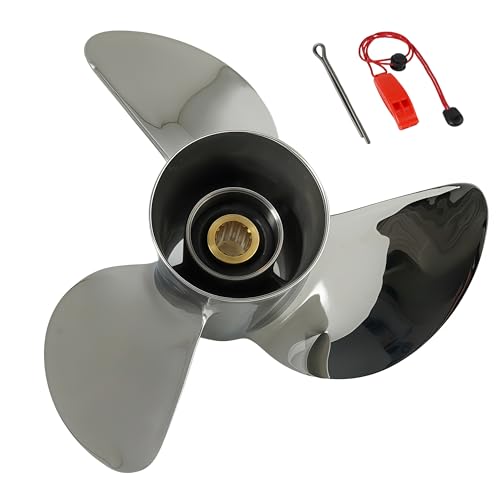
A two-inch pitch jump is a deliberate move, and this is the prop for owners who have the rpm data to justify it. The listing describes a 13 1/4-inch diameter, 17-inch pitch, three-blade aluminum prop with a 15-tooth spline and right-hand rotation, cross-referenced to Yamaha part number 6E5-45945-01-EL and fitted with the hub kit already installed. Its stated application runs across Yamaha 60 to 130 horsepower engines, the 70 included. On a light skiff that spins a 15 pitch past the top of the recommended range, that extra pitch is how you bring the tachometer back down without changing anything else.
Which One Fits Your Situation
Your Factory Prop Is Bent and You Just Want the Same Behavior Back
Order the DAFGSEA 13.5 x 15. It mirrors the size Yamaha fits as standard, its listing names the F70 outright, and it cross-references the factory part numbers, so you are replacing rather than re-tuning. Aluminum construction also keeps the sacrificial-blade behavior the original setup was designed around, which matters if the damage came from striking something solid.
The Boat Lives in Salt Water and the Old Prop Is Corroding
The QIKIRUO stainless prop keeps the factory diameter and pitch, so the engine behaves as it did, while the duplex stainless construction handles salt exposure far better than painted aluminum. Its composite hub is the detail to weigh: the seller presents it as a strength-and-elasticity compromise, which suits owners who still run shallow water occasionally.
You Carry Heavy Loads and the Boat Feels Slippery at Low Speed
Choose the YOUNG PROPS four-blade. The added blade area is the direct answer to slip under load, and holding pitch at 15 inches keeps the change focused on grip instead of rpm. Pontoon owners and anglers who fish with a full livewell and extra passengers are the ones who will notice the difference most.
Your Tachometer Says the Engine Spins Too Freely
If a 15 pitch lets your F70 run past its recommended full-throttle range with a normal load, the Qiclear 17 pitch is the correction. It keeps a three-blade aluminum layout and includes the hub kit, so the swap is simple. Confirm the over-revving with an accurate tachometer reading before committing, because pitch changes work in only one direction at a time.
Common Mistakes
Buying by horsepower alone: a prop listed for 70 HP can still carry the wrong spline count, so always match the 15-tooth spline and 4.25-inch gearcase to your shaft.
Confusing 13-spline props for smaller Yamaha gearcases with F70 props; the sizes look similar in photos and the part will not seat.
Jumping two pitch sizes to chase speed without a tachometer reading, which can leave the engine lugging below its recommended rpm range.
Ignoring rotation: the F70 uses a right-hand prop in standard rotation, and a left-hand counter-rotation prop is a different part entirely.
Reusing a worn thrust washer or skipping the hub check during the swap, then blaming the new prop for vibration the old hardware caused.
Frequently Asked Questions
What size prop comes on a Yamaha F70 from the factory?
Most F70 outboards ship with a three-blade aluminum prop around 13.5 inches in diameter and 15 inches of pitch, cross-referenced to Yamaha part number 6E5-45947-00-00. Boats vary, though, and dealers sometimes fit a different pitch for heavy hulls. The reliable check is the stamp on your own prop or the part number in your owner’s documentation, not a general chart.
How do I count the splines on my prop shaft?
Remove the prop nut and washer, slide the prop off, and count the ridges around the exposed shaft. The F70 uses 15 splines; smaller Yamaha gearcases use 13. Count carefully rather than estimating, because the two shafts look alike at a glance and a 13-spline prop will not mount on a 15-spline shaft. If the prop is stuck, a puller is safer than prying against the gearcase.
Is stainless steel worth choosing over aluminum on a 70?
It depends on your water. Stainless holds its blade shape, resists saltwater corrosion and shrugs off light contact, which suits regular coastal use. Aluminum costs less to replace and tends to sacrifice itself in a hard strike instead of passing the shock to the gearcase, which suits shallow rivers and lakes with submerged timber. Neither material fixes a wrong pitch or spline count.
Will a 17-inch pitch make my F70 faster?
Only if the engine currently reaches or passes the top of its recommended rpm range with a 15-inch pitch. More pitch loads the engine harder per revolution; on a boat that is already slow to plane or heavily loaded, it drops rpm further and can reduce speed. Treat pitch as an rpm adjustment first and a speed adjustment second, and change it one step at a time.
M
Melu Editorial Team
We compare specs, materials and verified owner reviews before a product earns a spot. Rankings are never paid.
Affiliate disclosure. As an Amazon Associate we earn from qualifying purchases at no extra cost to you. Prices accurate as of the date shown.
Best heavy duty trailer rims: five 15-inch wheels compared by load capacity, bolt pattern and center bore, so your trailer rolls on rims built for the load.
Best bolt on exhaust pipe kits for a no-weld exhaust build: stainless and mild steel pipe kits in 2.5 and 3 inch sizes, compared by material and gauge.
Best boat wax for saltwater 2: five waxes and polishes compared for fiberglass and gelcoat, UV defense and salt spray, so your hull stays bright all season.
Compare the best Diamond compound bows, from the wide-range Infinite 305 to the carbon Deploy SB, with draw ranges, speeds and package contents per fit.
Four hunting bow sights compared on the listing facts that decide a season: pin count and size, micro adjustment, second-axis leveling and pin brightness.
Three CPAP cleaners for home sanitization compared: a five-minute UV-C chamber and two ultrasonic tanks, with cycle times, tank sizes, and hose fit notes.



 Qiclear Aluminum Propeller 13.25 x 17