We independently review everything we recommend. When you buy through our links, we may earn a commission. As an Amazon Associate we earn from qualifying purchases.
4 Best Hunting Bow Sights for Compound Bows (November 2026)
Four hunting bow sights compared on the listing facts that decide a season: pin count and size, micro adjustment, second-axis leveling and pin brightness.
Four hunting bow sights compared on the listing facts that decide a season: pin count and size, micro adjustment, second-axis leveling and pin brightness.
A hunting bow sight decision is really three decisions stacked together: how many yardage pins you want inside the housing, how those pins are adjusted once the bow is tuned, and whether the pins stay visible during the last minutes of legal light. A sight that feels simple on the summer practice range can turn frustrating in November if its pins wash out at dusk, its bracket creeps under vibration, or its gang screws need a tool you left in the truck.
This roundup is for treestand whitetail hunters working inside forty yards, open-country hunters who stretch a pin stack to sixty, left-handed shooters tired of flipped right-hand hardware, and anyone setting up a first hunting bow. Every sight below was picked from its Amazon listing name and specifications, so pin counts, pin sizes, materials and model numbers come straight from the listing rather than from brand marketing pages.
Quick Picks
As an Amazon Associate we earn from qualifying purchases.
Product
Best for
Key spec from title
Trophy Ridge Fix 5-Pin Sight
Hunters who fine-tune each pin gap
Micro-adjustable .019 pins
Trophy Ridge Peak 5-Pin Sight
Left-handed hunters who want an open sight picture
Vertical in-line .019 pins
Trophy Ridge Joker 4-Pin Sight
First hunting bows and backup rigs
4 pins, .019 fiber optic
TOPOINT Archery 3-Pin Bow Sight
Close-range timber hunting with a simple stack
3 brass fiber pins, machined aluminum
How to Choose
Pin Count and Pin Size Decide Your Yardage Map
Pin count is a map of the distances you honestly expect to shoot. Three pins cover the classic twenty, thirty and forty yard marks that handle most treestand whitetail work, while five pins extend the stack to fifty and sixty for open ground. Pin diameter matters just as much: a .019 pin is easier to see in dim timber, but it covers more of a small target at distance, which is why many five-pin housings keep .019 pins up close. Match the stack to your terrain first, because extra pins you never use only crowd the sight picture when a deer appears between trees.
Adjustment Style: Gang Screws, Micro Clicks and Tool-Less Knobs
Every sight moves its whole housing for windage and elevation, called gang adjustment, but the better hunting sights add individual pin adjustment on top. Micro-adjustable pins turn on a threaded mechanism, often with the tool stored on the sight, so one pin can be corrected a hair without disturbing its neighbours. Tool-less knobs go further and let you make those gang moves with cold fingers in the stand. Plain screw-only sights still work, yet each correction is slower and easier to overshoot. If you shoot more than one arrow weight or swap bows mid-season, micro hardware repays its complexity quickly.
Pin Brightness and Low-Light Hardware
Most shot chances arrive in the first and last half hour of light, so pin brightness is a hunting feature, not a convenience. Long fiber runs gather more ambient light than short ones, and a rheostat light lets you raise pin output inside a dark ground blind without glaring the target picture. A glow ring around the housing helps your eye centre the peep faster, while a coloured hood accent frames the pin guard against a bright sky. Check whether the listing includes the light and its battery, because some sights accept a light that is sold separately, and that distinction only shows up in the fine print.
Housing Material, Mount Style and Hand Fit
Housings are machined aluminum or molded copolymer, and the trade is straightforward: aluminum shrugs off knocks against treestand rails, while copolymer keeps the bow lighter and damps vibration. Mounting deserves equal attention. Reversible brackets flip for left-hand bows, dedicated left or right listings do not, and multiple mounting holes let you set the housing distance from the riser to suit your peep alignment. Second-axis leveling, where the housing can be squared to the bow, protects accuracy on angled shots. Confirm the hand configuration printed on the listing before ordering, since a sight built for the opposite hand cannot simply be flipped over.
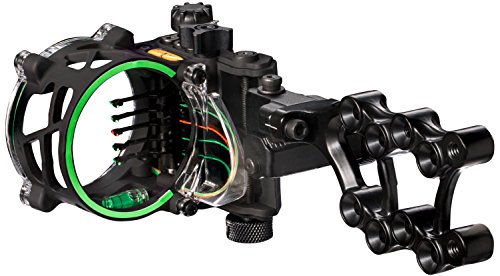
The Fix 5 is built for the hunter who sights in once and then keeps refining pin gaps as the season goes on. Each of its five pins moves on its own micro adjustment with the tool stored on the sight itself, so the forty-yard pin can be corrected without disturbing the twenty. Tool-less gang knobs handle the bigger windage and elevation moves, and second-axis leveling keeps the housing honest on angled shots. The rheostat light lets you lift pin brightness inside a dark blind without washing out the target picture at dawn.
Most bow sights stack their pins in a tight horizontal row, and the Peak instead lines its five pins up in a single vertical column. That in-line layout leaves more of the animal visible on either side of the aiming points, which helps when a deer steps behind brush at the edge of the shot window. The adjustments are tool-less micro clicks for both windage and elevation, second-axis leveling is built in, and a glow ring around the housing speeds up peep alignment. This listing is the left-hand AS315L configuration, molded in Ballistix CoPolymer to keep weight down.
The Joker keeps the formula plain: four horizontal fiber pins, a reversible bracket and a bubble level, with none of the micro hardware that drives other sights up in complexity. That simplicity is the point for a first hunting bow or a backup rig, because every adjustment is a basic screw you can understand at a glance. The aluminum housing keeps it sturdier than the all-plastic sights in its class, the green hood accent frames the sight picture quickly, and the reversible mount means the same sight works on a left-hand bow without a second purchase.
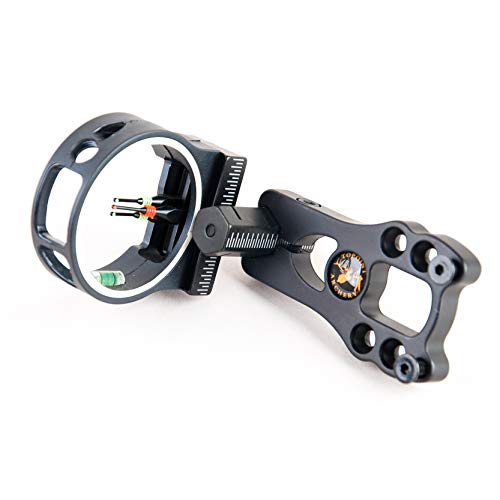
Three pins is all some timber hunters ever use, and this TOPOINT sight is machined from aluminum rather than molded, which separates it from most entry-level three-pin housings. The pins themselves use brass construction with fiber optics, a combination meant to keep the aiming points bright while surviving the knocks a working bow takes in a truck bed and a treestand. The listing covers compound, recurve and crossbow mounting, and the same housing fits right- and left-hand bows. There is no sight light fitted, so the fibers work with whatever daylight the woods give them.
Which One Fits Your Situation
Treestand Whitetails Inside Forty Yards
Short, known distances reward a short pin stack. The Joker’s four pins or the TOPOINT’s three cover the lanes most treestand hunters actually clear, and both keep the sight picture uncrowded when a deer stops between trees. The Joker adds a bubble level and a reversible mount for the same job, while the TOPOINT answers with a machined aluminum housing for hunters whose gear rides loose in a truck bed all season.
Open Country and Longer Shots
Where shots stretch toward fifty and sixty yards, pin gaps need to be exact rather than guessed. The Fix 5 earns its place here: five pins, each on its own micro adjustment, plus second-axis leveling that keeps the housing square when the shot angle tilts downhill. Gang moves stay tool-less, so a windage correction at the practice butt does not become a search through a pack for a hex key.
You Shoot Left-Handed
Left-handed hunters usually end up flipping a right-hand sight and accepting a level that sits in the wrong place. The Peak avoids that compromise because this listing is a dedicated left-hand build, model AS315L, with its tool-less clicks, second-axis leveling and glow ring arranged for a left-hand riser. The Joker and the TOPOINT also fit left-hand bows through reversible housings, but the Peak is the only pick here designed solely for the left side.
First and Last Light in a Ground Blind
Inside a blind, ambient light drops long before legal shooting time ends, and plain fibers go dull first. The Fix 5 counters with a rheostat light whose battery is included in the box, letting you raise pin brightness in small steps. The Peak’s glow ring and adjustable rheostat light solve the same problem for left-handed shooters. Either way, set the light to the lowest setting that stays visible, because an overbright pin hides the animal behind it.
Common Mistakes
Buying a five-pin sight for woods where no shot passes forty yards, then fighting a crowded sight picture all season.
Choosing the wrong hand configuration on the listing and discovering at mounting time that the housing cannot be flipped.
Skipping second-axis leveling, which quietly throws shots sideways on steep treestand and downhill angles.
Assuming every sight includes its rheostat light and battery, when some listings only say a light is compatible.
Setting every pin at the range in summer and never rechecking the gaps once broadheads replace field points.
Frequently Asked Questions
How many pins do I need for deer hunting?
Most treestand hunters are covered by three or four pins set at twenty, thirty and forty yards, with a fourth reaching fifty for field edges. Five pins make sense where open ground regularly stretches shots to sixty. Extra pins beyond your real distances add clutter, so count the lanes you actually shoot before choosing the stack.
Is a .019 or .010 pin size better for hunting?
A .019 pin is brighter and easier to track in dim timber, which is why every sight in this roundup uses it. A .010 pin covers less of the target at long range and suits open-country shooting, but it fades sooner at dusk. For whitetail work inside forty yards, visibility usually matters more than the finer aiming point.
Does a left-handed bow need a left-hand sight?
It needs a sight that mounts correctly on a left-hand riser, which means either a dedicated left-hand configuration like the Peak listing above or a reversible housing like the Joker and TOPOINT use. A fixed right-hand sight cannot be flipped without putting its level and adjustments in the wrong places, so check the hand printed on the listing.
What does second-axis adjustment actually do?
Second-axis adjustment lets you square the sight housing to the bow so the bubble level reads true when the bow is held vertically. Without it, a housing that sits slightly rotated pushes shots left or right, and the error grows on angled shots from a treestand. Sights with the feature, like the Fix 5 and the Peak, include a level to set it against.
M
Melu Editorial Team
We compare specs, materials and verified owner reviews before a product earns a spot. Rankings are never paid.
Affiliate disclosure. As an Amazon Associate we earn from qualifying purchases at no extra cost to you. Prices accurate as of the date shown.
Three CPAP cleaners for home sanitization compared: a five-minute UV-C chamber and two ultrasonic tanks, with cycle times, tank sizes, and hose fit notes.
Five cigar lighters compared on jet count, fuel windows and built-in tools, from triple torch multipacks to a quad jet pick for wide ring gauges and wind.
There is no Intel i8 processor. This guide explains the mix-up and rounds up the best Intel LGA 1700 motherboards for high-end Core i7 and Core i9 builds.
Compare the best smartwatches for lg phones with Wear OS, GPS, heart rate and sleep tracking, plus battery life details to pair with your LG handset today.
Compare the best cpu coolers with push pins for Intel builds, covering tool-free mounting, socket fit, fan noise and low-profile options for simple installs.
Compare cameras for indoor guitar playing, framed for recording and streaming at home, with flip screens, microphone inputs and clean streaming output.
Four spotting scopes that pull double duty after dark, compared on aperture, magnification range and eyepiece options, with listing specs for each pick.



 TOPOINT Archery 3-Pin Bow Sight