We independently review everything we recommend. When you buy through our links, we may earn a commission. As an Amazon Associate we earn from qualifying purchases.
5 Best Cheap Motorcycle Helmets for Riders (November 2026)
Looking for the best cheap motorcycle helmet? Compare 5 DOT-approved full-face and modular helmets with dual visors and strong ventilation for riders.
Looking for the best cheap motorcycle helmet? Compare 5 DOT-approved full-face and modular helmets with dual visors and strong ventilation for riders.
A low sticker amount means little when a helmet fits badly, fogs on a cold morning, or leaves the rider sweating through a summer commute. The real decision is which corners a budget lid can cut safely: shell strength and certification cannot move, while extras such as a second visor, a washable liner, or a flip-up chin bar decide whether the helmet stays comfortable for months. Buyers also face sizing traps, since budget brands often run small, and a helmet ordered in the usual size can press the forehead or squeeze the cheeks.
This guide is for new riders buying a first helmet, commuters who ride daily through changing light and weather, and weekend riders who want a spare lid without stretching the budget. Each helmet below was chosen from names and specifications on its Amazon product page, with a focus on DOT certification, ventilation, visor options, and liner care.
Quick Picks
As an Amazon Associate we earn from qualifying purchases
Product
Best for
Key spec from title
ILM JK313 Full Face
Daily commuting in all seasons
Two visors plus winter neck scarf
GLX GX11 Compact Full Face
Highway riders who want quiet airflow
Three intakes and four exhaust outlets
TRIANGLE TFF15 Full Face
Hot-weather street riding
Four air intakes and exhaust vents
ILM 902 Dual Visor Modular
Riders who stop often and talk at lights
Flip-up chin bar with dual visors
1Storm HJDJ11 Full Face
Sport riders who tune airflow by hand
Three-level top ventilation system
How to Choose
Certification Comes First
A helmet without a recognized safety standard is a shell with a strap, not protection. Look for DOT certification under FMVSS 218 printed on the label inside the helmet, and treat ECE 22.05 or 22.06 as a bonus when it appears. Budget helmets from ILM, GLX, TRIANGLE, and 1Storm all list DOT compliance, which is the minimum a street rider should accept. Check the listing for the certification wording before ordering, and inspect the label the moment the box arrives. A missing or vague label is a reason to send the helmet back rather than ride in it.
Fit Decides Whether You Wear It
The safest helmet is the one that fits well enough to wear on every ride. Measure the head just above the eyebrows and ears, then compare that number with the size chart on the product page instead of guessing from a hat size. Budget shells often run a size small, so a rider between sizes should size up and check the return terms. The helmet should press evenly around the crown without a painful spot on the forehead, and it should not slide sideways when the rider shakes the head. Cheek pads that feel tight on day one usually settle, while forehead pressure rarely does.
Ventilation and Visors Shape Daily Comfort
A cheap helmet becomes expensive to live with when it fogs, overheats, or forces the rider to carry a spare shield. Count the intake and exhaust vents and look for a chin vent that feeds air across the inside of the shield. A second tinted visor, a drop-down sun shield, or an included anti-fog film saves a separate purchase and keeps the rider from squinting into low sun. Quick-release buckles matter too, since a fiddly D-ring strap discourages wearing the helmet for short trips. Removable liners extend the life of a budget lid because sweat and road dust wash out.
Know Where Budget Helmets Cut Corners
Budget helmets save money with ABS thermoplastic shells instead of fiberglass or carbon fiber, and that trade is acceptable when the shell still meets DOT standards. The cuts that matter show up elsewhere: thinner padding that packs down after a season, visor pivots that loosen, vent sliders that feel small with gloves on, and liners that are not removable. A modular helmet adds a hinge and a latch, which bring weight and a possible rattle, so a flip-up design should earn its place with real convenience. Read the listing for warranty length and spare visor availability before choosing.
The 5 Best Options
ILM JK313 Full Face Motorcycle Helmet
Top Pick
ILM JK313 Full Face Motorcycle Helmet
Best for: Daily commuters who ride through changing daylight and cold mornings.
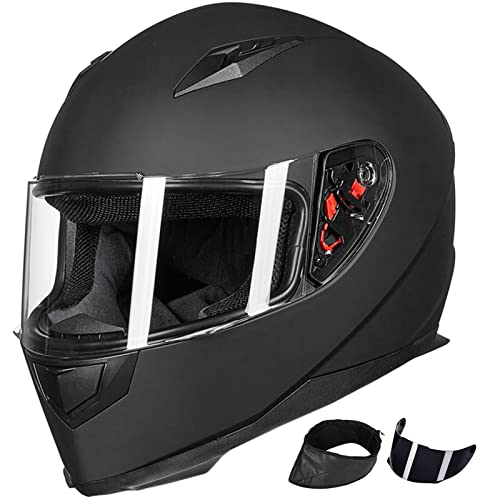
The ILM JK313 suits riders who want one helmet for the whole year without buying accessories separately. Two visors arrive in the box, one clear and one smoked, so the rider swaps shields when daylight changes instead of riding with a dark shield after dusk. A removable winter neck scarf blocks cold air at the collar, and the removable inner lining pads wash out after sweaty summer weeks. A quick-release clasp speeds up putting the helmet on and taking it off, which matters for commuters who gear up twice a day.
GLX GX11 Compact Full Face Motorcycle Helmet
Runner-Up
GLX GX11 Compact Full Face Motorcycle Helmet
Best for: Highway and long-distance riders who want quiet, adjustable airflow.
ABS shell with EPS liner and faux leather trim
Three adjustable air intakes and four exhaust outlets
The GLX GX11 fits riders who spend long stretches at highway speed and want the shell to stay quiet. Its wind-tunnel-tested shape cuts drag, while three adjustable air intakes and four exhaust outlets let the rider tune airflow without lifting the shield. An extra tinted visor comes in the box, and the wide shield opening gives a broad field of view for checking mirrors and blind spots. The compact format also stores more easily in a top case or under a seat than a bulky touring shell.
TRIANGLE TFF15 Full Face Motorcycle Helmet
TRIANGLE TFF15 Full Face Motorcycle Helmet
Best for: Riders in hot weather who rank ventilation above extra features.
The TRIANGLE TFF15 is the pick for riders in warm climates who need air moving through the helmet all day. Four strategically placed air intakes and exhaust vents cycle heat away from the scalp, and the EPS foam interior absorbs energy under the rugged ABS outer shell. The helmet meets DOT FMVSS 218 requirements, which is the baseline a street rider should demand at this tier. Its straightforward full-face layout suits street, cruiser, and sport bikes without extra mechanisms to learn or maintain.
ILM 902 Dual Visor Modular Motorcycle Helmet
ILM 902 Dual Visor Modular Motorcycle Helmet
Best for: Urban and touring riders who open the chin bar at stops.
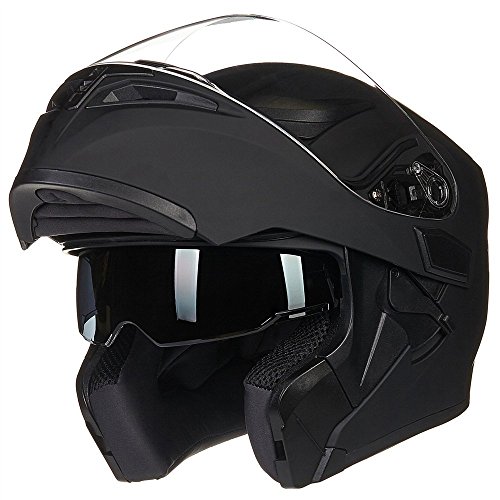
The ILM 902 suits riders who stop often, whether for fuel, directions, or a conversation at a light. Its flip-up chin bar converts the helmet from full-face coverage to an open configuration in one motion, and a micrometrically adjustable strap fine-tunes the fit. The clear visor carries anti-scratch and anti-fog coatings and opens to a wide angle, which helps the rider keep sight of traffic while turning the head. A second sun visor sits behind the main shield for bright stretches of road.
1Storm HJDJ11 Full Face Motorcycle Helmet
1Storm HJDJ11 Full Face Motorcycle Helmet
Best for: Sport riders who want precise, adjustable ventilation at speed.
Thermoplastic alloy shell with UV-protective glossy coating
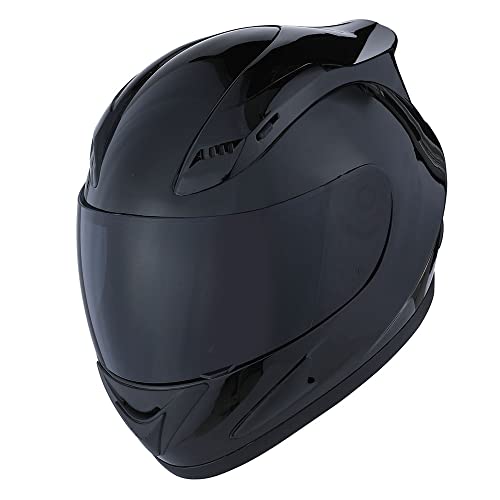
The 1Storm HJDJ11 fits sport riders who adjust airflow by hand as conditions change. A three-level top ventilation system and five-position ventilation channels give more control than the fixed vents on most budget lids, and a rear venturi-effect exhaust spoiler pulls warm air out at speed. The thermoplastic alloy shell stays light, and a UV-protective glossy coating guards the finish against sun fading. An extra anti-fog film keeps the shield clear in humid or cold air, and the interior padding removes for washing.
Which One Fits Your Situation
A First Helmet for a New Rider
A new rider should start with the ILM JK313, because the two included visors and the neck scarf cover day, night, and cold mornings without extra purchases. The quick-release clasp and removable liner make daily use simple, and the five-year warranty is the longest in this group. Measure the head carefully against the size chart before ordering, since a snug first fit is what keeps the helmet on the head.
Long Highway Commutes in Summer
The GLX GX11 is the better call for highway commuting, because its wind-tunnel-tested shape and seven-vent layout keep air moving at speed while limiting wind noise. The extra tinted visor handles bright afternoon glare, and the compact shell stores easily at work. Set the intake sliders before riding, since they are small to operate with gloves on.
City Riding With Frequent Stops
The ILM 902 modular helmet suits city riding, because the flip-up chin bar opens at fuel stops and traffic lights without removing the helmet. The dual visor setup handles bright streets and shaded blocks in the same ride, and the micrometric strap adjusts quickly between stops. Accept the extra hinge weight as the cost of that convenience.
Riding in Heat on a Tight Budget
The TRIANGLE TFF15 fits hot-weather riding, because its four intakes and exhaust vents move more air than the other fixed full-face options here. The simple layout has no hinge to maintain, and the ABS shell with EPS liner meets the DOT standard. Check the fit on arrival and keep the one-year warranty in mind when inspecting the vents.
Common Mistakes
Ordering the usual hat size without measuring the head against the product page size chart.
Choosing a helmet for its graphic or color instead of its certification label and fit.
Riding with a dark shield after dusk because no clear visor came in the box.
Skipping the label check on arrival and discovering a missing DOT marking weeks later.
Treating a modular hinge as equal protection to a fixed full-face shell without checking the latch.
Frequently Asked Questions
Is a cheap motorcycle helmet safe to ride in?
A low-cost helmet can protect well when it carries DOT certification under FMVSS 218 and fits the rider correctly. Certification and fit matter more than the brand name or the shell material at this tier. Inspect the label inside the helmet on arrival, confirm the size chart match, and replace the helmet after any hard impact, even when the shell looks undamaged.
How do I pick the right size for a budget helmet?
Measure around the head just above the eyebrows and ears, then match that number to the size chart on the product page. Budget helmets often run a size small, so a rider between two sizes should size up and confirm the return terms first. The helmet should press evenly without a painful forehead spot and should not slide when the head shakes.
Should a first helmet be full-face or modular?
A fixed full-face helmet is simpler, lighter, and has no hinge to wear out, which makes it a strong first choice for most new riders. A modular helmet earns its place for riders who stop often and want to open the chin bar without removing the helmet. Either style works when it is DOT certified and fits well, so choose by riding pattern.
How often should a budget motorcycle helmet be replaced?
Replace a helmet after any crash or hard drop, and plan on a new one after about five years of regular use, since liners pack down and materials age. A helmet that fogs constantly, has a loose visor pivot, or no longer fits snugly has reached the end of its useful life. Washable liners extend comfort, but they do not extend the shell’s service life.
M
Melu Editorial Team
We compare specs, materials and verified owner reviews before a product earns a spot. Rankings are never paid.
Affiliate disclosure. As an Amazon Associate we earn from qualifying purchases at no extra cost to you. Prices accurate as of the date shown.
Compare five binoculars for glasses wearers, from long eye relief models to an eyeglass-friendly pair, and match eye relief, size, and use to your needs.
Looking for the best 1000 watt ebike? We compare five 1000W-peak electric bikes on motor, battery, range, gears and brakes to help you pick the right one.
Compare electric concrete cut-off saws by cut depth, blade size, motor power and dust control, and find the right saw for slabs, pavers and block work.



 ILM 902 Dual Visor Modular Motorcycle Helmet
 1Storm HJDJ11 Full Face Motorcycle Helmet