We independently review everything we recommend. When you buy through our links, we may earn a commission. As an Amazon Associate we earn from qualifying purchases.
5 Best Garden Weeder Tools for Clean Beds (November 2026)
Stand-up claw pullers, a forged hand weeder, a Japanese weeding sickle and an ergonomic fork compared on head design, handle length and materials.
Stand-up claw pullers, a forged hand weeder, a Japanese weeding sickle and an ergonomic fork compared on head design, handle length and materials.
The real decision behind a weeder tool is not which one pulls a weed — most of them do — but which working position you can keep up for a whole bed or a whole lawn. A stand-up claw puller keeps you off your knees but only tackles one plant at a time, while a hand sickle clears a crowded border quickly yet asks you to crouch for every pass. Pick the wrong format and the tool ends up in the shed by June.
This roundup is for lawn owners chasing dandelions, raised-bed gardeners weeding between seedlings, and anyone whose knees or wrists set the limit on a session. The five tools below were picked from their Amazon listing names and stated specifications: head design, handle length and material, blade or claw material, and overall weight. Between them they cover claw pullers, a curved hand weeder, a weeding sickle and an ergonomic fork.
Quick Picks
As an Amazon Associate we earn from qualifying purchases
Product
Best for
Key spec from title
Fiskars 4-Claw Stand Up Weed Puller
Lawn weeds without kneeling
39-inch aluminum shaft, 4 stainless claws
Grampa’s Weeder Original Stand Up Puller
Simple lever pulling on lawns
46-inch bamboo handle, 4-claw steel head
CobraHead Original Weeder & Cultivator
Digging and cultivating in beds
Forged steel blade, recycled plastic handle
SUIZAN Nejiri Kama Weeding Sickle
Slicing weeds in dense plantings
13-inch tool, two-layer carbon steel blade
Radius Garden 102 Ergonomic Hand Weeder
Sore hands and weak grips
Curved handle, serrated aluminum blade
How to Choose
Match the Format to the Ground You Weed
Start with the surface, not the tool. On an open lawn, weeds arrive one at a time and stand-up claw pullers make sense: you center the head, step on the foot platform and lever the plant out, root included. In a planted bed the spacing is tighter and a claw head is too wide, so a hand weeder or sickle that works between stems earns its place. Borders along paths and pavers sit in between; there a narrow fork or curved blade reaches into gaps a puller cannot enter without tearing up the edging.
How the Head Removes the Weed
Claw pullers grip the root crown from several sides and lift the whole plant, which suits taprooted weeds like dandelions and thistles. Fork and curved-blade hand weeders slide beside the root and pry, giving you control in soil you do not want to disturb. A weeding sickle works differently: its angled edge slices stems and shallow roots just under the surface on a pull stroke, clearing many small weeds fast but leaving deep taproots behind. Read the listing for the head material and shape, because that pairing decides which weeds the tool handles well.
Handle Length, Grip and Your Joints
Handle length sets your posture. Stand-up models in this group run from about 39 to 46 inches, and the taller figure suits taller gardeners who would otherwise hunch over a shorter shaft. For hand tools, the grip matters more than the inches: a curved handle keeps the wrist in its natural line, an offset handle on a stand-up puller reduces wrist strain while you lever, and a plain straight grip is fine for short sessions. If your hands ache, weight counts too — the lightest hand tools here weigh only a few ounces.
Materials That Survive Soil and Weather
Soil is abrasive and often wet, so head material decides how long the working edge lasts. Stainless and forged carbon steel hold up to prying in stony ground, while die-cast aluminum will not rust when a tool is left out overnight, though it gives up some prying strength. Handles split along similar lines: bamboo and hardwood feel warm and light, aluminum shafts keep a stand-up puller near two and a half pounds, and recycled plastic grips shrug off rain. Check the listing for the stated materials rather than judging by the photo alone.
The Fiskars is the stand-up puller for gardeners who clear dandelions and thistles from a lawn week after week and want the weed gone without handling it. Four serrated stainless-steel claws close around the root when you step on the reinforced foot platform, and the easy-eject mechanism clears the head afterward, so the rhythm is place, step, lever, eject. A viewing window in the pedal helps you center the claws on the crown instead of guessing, and the offset handle keeps your wrist straighter during the levering motion.
Grampa’s Weeder is the original lever-style puller, built around a bamboo handle and a four-claw steel head with no moving mechanism to jam or adjust. You center the claw over the weed, press the footpad into the ground, take your foot off, then lean the handle so the claw grips and lifts the plant out by the root. That simple sequence is the appeal for gardeners who find eject buttons and sliding parts fussy, and the 46-inch handle gives taller users a straighter back than shorter stand-up tools.
The CobraHead takes the opposite approach to the claw pullers: a single curved forged-steel blade shaped like a fingernail that you draw through the soil beside a weed. It levers out taproots in beds, breaks up crusted soil, opens a furrow for seed and edges along a path, which makes it the pick for gardeners whose weeding happens inside planted rows rather than on open lawn. The recycled plastic handle is shaped for either hand, and the slim profile slips between seedlings without bulldozing the row.
The SUIZAN Nejiri Kama is a Japanese weeding sickle for gardeners who would rather cut weeds off below the surface than pull them. Its two-layer carbon steel blade sits at an angle on a short wooden handle, and a pull stroke shaves stems and shallow roots just under the soil line, which clears a dense patch of seedlings or crabgrass faster than any gripping tool here. At 13 inches and seven ounces it works close to the hand, suiting raised beds, herb plantings and the tight ends of rows.
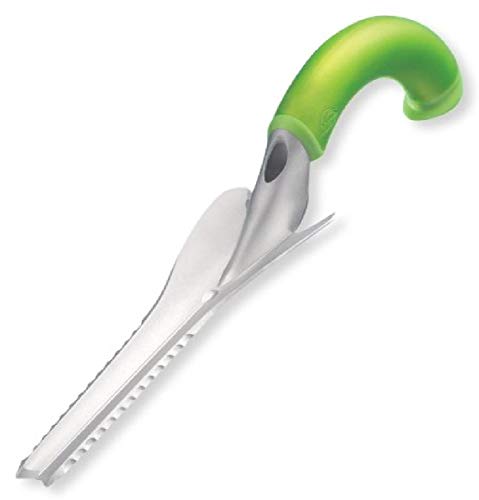
The Radius Garden 102 is a hand weeder built around the grip rather than the blade. Its handle curves so your wrist stays in a relaxed line while you push the serrated, V-shaped blade beside a root and lift, which is why it suits gardeners with sore hands, a weak grip or stiff wrists. The blade is die-cast aluminum — it will not rust, it is reinforced against bending, and at 7.2 ounces the whole tool is light enough for a long session in containers and borders.
Which One Fits Your Situation
Dandelions Scattered Across a Whole Lawn
Take one of the stand-up claw pullers and work the lawn in a grid after rain, when roots release cleanly. The Fiskars suits high volumes because its eject mechanism keeps your hands off the pulled plants, while Grampa’s Weeder suits gardeners who prefer the plain lever action and a longer bamboo handle. Either way, the claw has to be centered on the crown; an off-center strike snaps the stem and leaves the taproot to regrow.
Weeds Threaded Between Perennials You Want to Keep
Work with the CobraHead or the Radius Garden 102, both of which put a narrow working end exactly where your fingers point. The CobraHead’s curved blade slides under a weed beside a crown without disturbing the neighbor, and the Radius fork lifts with a short lever motion. A claw puller is the wrong shape here: its head needs a clear circle of soil and will tear the planting you are trying to protect.
A Vegetable Row That Needs a Fast Weekly Pass
Reach for the SUIZAN sickle. A pull stroke with the angled blade shaves seedling weeds off just below the surface, so a whole row takes minutes and the soil around your crops is barely disturbed. Work while the weeds are still at the thread stage; once stems thicken, the same pass needs a second stroke, and deep-rooted intruders still have to come out with a fork or the CobraHead afterward.
Hands That Ache Before the Bed Is Finished
Choose by grip first and blade second. The Radius Garden 102 bends the handle so your wrist stays neutral and weighs 7.2 ounces, the lightest lifting tool here. If standing is also easier than kneeling, the Fiskars pairs an offset handle with a foot platform, moving the effort into your leg. Avoid long sessions with a plain straight grip, which concentrates the prying force in bent fingers and a flexed wrist.
Common Mistakes
Centering a claw puller beside the crown instead of over it, which snaps the stem and leaves the taproot behind.
Using a weeding sickle on deep taproots and expecting them gone; slicing removes growth, not the root.
Prying sideways with a thin hand blade against buried stones, which bends or chips the edge.
Weeding bone-dry, compacted soil when a watering the day before would let roots release whole.
Leaving steel tools in wet soil overnight instead of wiping the blade dry, which invites rust.
Frequently Asked Questions
Do stand-up weed pullers remove the whole root?
They are designed to. The claws close around the root crown when you step on the foot platform, and levering the handle lifts the plant with its taproot in most lawn soils. In dry, compacted ground the root can still snap, which is why the same job goes better a day after watering, when the soil releases the root instead of gripping it.
How is a weeding sickle different from a hand weeder?
A hand weeder digs beside one plant and levers it out, root and all, which is slow but complete. A sickle like the SUIZAN works on a pull stroke and slices many weeds at or just below the surface in one pass. Use the sickle for dense, shallow growth in beds, and the hand weeder for individual taprooted weeds you cannot leave behind.
When is the best time to weed with these tools?
Weed a day after rain or a deep watering. Moist soil lets claw pullers lift taproots whole and lets blades slide instead of bouncing off the surface. Avoid working right after a downpour, when beds are muddy and foot platforms sink, and avoid mid-summer drought soil, which grips roots hard enough to snap them and leave the crown behind.
How do I keep a carbon steel blade in good shape?
Wipe soil and moisture off the blade after each session and store the tool dry, because carbon steel rusts faster than stainless. Hone the edge with a fine file or stone when cuts start to tear instead of slice, following the original bevel. A light coat of oil before winter storage keeps the edge bright until spring work begins again.
M
Melu Editorial Team
We compare specs, materials and verified owner reviews before a product earns a spot. Rankings are never paid.
Affiliate disclosure. As an Amazon Associate we earn from qualifying purchases at no extra cost to you. Prices accurate as of the date shown.
Compare five binoculars for glasses wearers, from long eye relief models to an eyeglass-friendly pair, and match eye relief, size, and use to your needs.
Looking for the best 1000 watt ebike? We compare five 1000W-peak electric bikes on motor, battery, range, gears and brakes to help you pick the right one.
Compare electric concrete cut-off saws by cut depth, blade size, motor power and dust control, and find the right saw for slabs, pavers and block work.


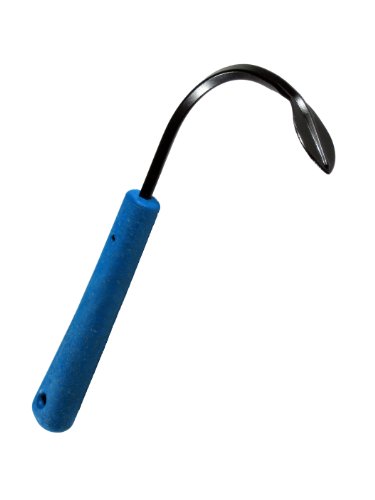
 SUIZAN Nejiri Kama Weeding Sickle
 Radius Garden 102 Ergonomic Hand Weeder