We independently review everything we recommend. When you buy through our links, we may earn a commission. As an Amazon Associate we earn from qualifying purchases.
4 Best Livestock Fly Sprays for Sprayers (November 2026)
Compare livestock fly spray concentrates and a ready-to-use refill made for pump, backpack and misting sprayers, with dilution yields and label checks.
Compare livestock fly spray concentrates and a ready-to-use refill made for pump, backpack and misting sprayers, with dilution yields and label checks.
Buying fly spray in a bottle that is ready to squirt gets expensive fast on a working farm, which is why most livestock keepers mix their own. The real decision is which concentrate strength matches your sprayer and your animals: a quart of strong concentrate can make anything from a few dozen to a few hundred gallons of finished spray, while a ready-to-use refill skips mixing entirely but costs more per gallon sprayed.
This guide is for cattle, horse, sheep, goat and poultry keepers who apply spray with pump or backpack sprayers, and for barns running automatic misting systems. Every pick below is a liquid sold for sprayer use on Amazon US: three permethrin concentrates you dilute yourself, plus one ready-to-use gallon refill for topping up spray bottles without any measuring.
Quick Picks
As an Amazon Associate we earn from qualifying purchases
128 oz ready-to-use refill, sweat-resistant formula
How to Choose
Match the Concentrate Strength to Your Dilution Math
Permethrin concentrates for livestock are commonly sold at 10 or 13.3 percent active ingredient, and the percentage changes how far a bottle goes rather than how strong the finished spray should be. The label sets a dilution rate for each job, and a stronger concentrate simply needs less product per gallon of water. Before buying, do the arithmetic for your herd size and sprayer tank: a gallon jug suits operations that spray groups of cattle and whole barns regularly, while a pint or quart concentrate is the sensible size for a handful of animals, because opened concentrate that sits for seasons is money stored on a shelf.
Confirm Your Animals and Use Sites Are on the Label
A livestock fly spray is only legal and safe to use the way its label describes, so read the target species list before anything else. The concentrates in this guide are labeled for combinations of beef and dairy cattle, horses, sheep, goats, swine and poultry, but the details differ by brand, including whether a product is cleared for lactating dairy animals or only for premises. Also separate on-animal use from premise use in your mind: some dilutions are mixed for spraying the animal’s coat, and others are mixed stronger for barn walls, stalls and fencing where animals do not directly contact the wet surface.
Check Compatibility With Your Sprayer or Misting System
Pump and backpack sprayers accept almost any properly diluted water-based mix, but automatic misting systems are pickier, because the concentrate has to stay suspended and pass through fine nozzles without clogging. If you run a misting system, choose a concentrate whose listing explicitly mentions misting systems or handheld foggers, and follow its system dilution rather than the stronger on-animal rate. For hand spraying, a standard pump sprayer with an adjustable nozzle is enough, and a dedicated measuring cap or squeeze-and-pour bottle saves guesswork when you are mixing small batches in the barn aisle.
Decide Between Concentrate and Ready-to-Use Refill
Concentrates win on cost per gallon and storage space, and they let you mix exactly the amount a job needs, from a single backpack tank to a full premise spray. Their cost is effort and accuracy: someone has to measure, mix and label the sprayer every time. A ready-to-use gallon refill removes the mixing step entirely and keeps the formula consistent from bottle to bottle, which suits horse owners topping up individual spray bottles. The trade-off is paying for a product that is mostly water and taking up more shelf space per treatment, so most mixed operations keep one of each.
The gallon jug is the workhorse pick for anyone spraying both animals and buildings through the same sprayer. Gordon’s formula is a 10 percent permethrin concentrate labeled for horses, cattle, sheep, goats, swine and poultry, and the listing describes control of flies, ticks, fleas and lice lasting up to three weeks per application. It is also labeled as a premise spray for non-food areas of dairies, cattle barns and kennels, which makes it the natural choice for a farm that wants one product to mix at animal strength for the herd and at premise strength for stalls and barn walls.
Martin’s Permethrin 13.3 percent Concentrate, 32 oz
Martin’s is the high-yield option, built around a stronger 13.3 percent permethrin concentrate that stretches a single quart much further than the 10 percent products. The listing states that one quart makes up to 48 gallons of contact and residual spray and up to 266 gallons for large animal sprays, and it specifically names handheld foggers and automatic misting systems as application equipment. That makes it the pick for barns with installed misting lines and for keepers who spray large groups, where a compact quart bottle quietly replaces shelf after shelf of ready-to-use spray.
Specs
Active ingredient: Permethrin 13.3 percent concentrate
Container size: 32 fluid ounces
Item model number: 82004493
Yield per listing: up to 48 gallons of contact spray, up to 266 gallons of large animal spray per quart
Equipment named on listing: handheld foggers and automatic misting systems
Best for: Barns with misting systems and anyone who wants maximum finished spray per bottle
Watch out for: The yield figures depend on using the correct label dilution for each use, so check the rate before assuming the full 266 gallons
ASIN: B00PBGNCYY
Durvet Permethrin EC 10 Percent, 16 oz
Runner-Up
Durvet Permethrin EC 10 Percent, 16 oz
Best for: Small herds and hobby farms that mix a few sprayer tanks per season
Active ingredient: Permethrin 10 percent emulsifiable concentrate
Container size: 16 fluid ounces (473 ml)
Item model number: 2253554
Target species per listing: dairy cattle, beef cattle, horses, sheep, goats, dogs, swine, poultry
Durvet’s pint bottle is the right-sized concentrate for small herds, hobby farms and anyone mixing their first sprayer batches. The listing describes it as a rapid kill insecticide concentrate for on-animal and premise use, with a target species list covering dairy cattle, beef cattle, horses, sheep, goats, dogs, swine and poultry. Because the bottle is small, you can work through it within a season or two instead of storing an opened gallon for years, and the emulsifiable concentrate format mixes into water for pump, backpack or hand sprayers without special equipment.
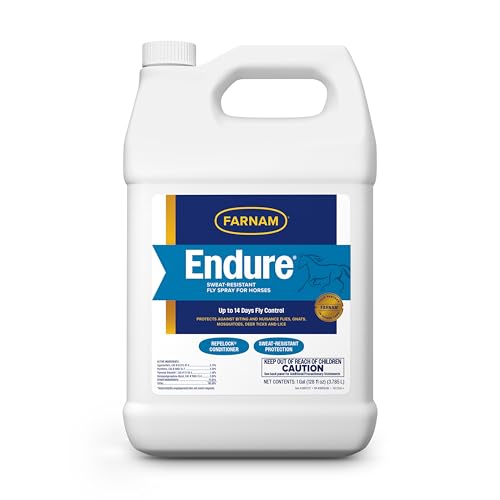
Endure is the one ready-to-use product in this guide, included for horse owners who would rather refill than mix. The gallon jug is an easy-pour refill for quart spray bottles, and the formula is built to keep working when horses sweat or get rained on, using the brand’s RepelLock conditioner to bind the spray to the hair coat. It is a horse product rather than a whole-livestock concentrate, so it does not replace the permethrin concentrates for cattle work, but for stables that go through spray bottle after spray bottle all summer it removes measuring from the routine entirely.
Which One Fits Your Situation
You Spray a Cattle Herd and the Barn in the Same Round
Start with the Gordon’s gallon. One jug covers both halves of the job: mix at the on-animal rate for the herd, then at the premise rate for stalls, fences and barn walls. Its gallon size matches the rhythm of an operation that fills a backpack or pump sprayer many times a month, and you will not be reordering in the middle of peak fly season.
Your Barn Runs an Automatic Misting System
Choose Martin’s 13.3 percent concentrate. Its listing explicitly covers automatic misting systems and handheld foggers, and the high dilution yield means a single quart keeps a system reservoir supplied for a long stretch. Follow the system dilution on the label rather than the stronger contact-spray rate, and confirm your nozzle manufacturer’s guidance before the first fill.
You Keep a Few Animals and Mix Small Batches
The Durvet pint is sized for you. It covers the common livestock species list, mixes easily into a one or two gallon pump sprayer, and is small enough to use up while it is fresh. It is also the lowest-commitment way to learn concentrate mixing before deciding whether a quart or gallon jug makes sense for your place.
You Board Horses and Refill Bottles Constantly
Keep the Endure gallon refill on the shelf. Nobody at a busy stable wants to measure concentrate before every ride, and the ready-to-use jug pours straight into quart bottles with a sweat-resistant formula that suits horses in work. Pair it with one of the concentrates above if the same property also needs premise spraying in the barn itself.
Common Mistakes
Spraying a species that is not on the product’s label, especially assuming a horse product is cleared for cattle or a cattle product for dairy animals in milk.
Mixing stronger than the label dilution in the belief it will work better, which wastes concentrate and can leave illegal or unsafe residues.
Using an on-animal dilution for premise spraying or the reverse, when the label sets different rates for coats and for barn surfaces.
Spraying over feed, water troughs or milking equipment instead of covering or removing them first, as the labels direct.
Leaving mixed spray sitting in the sprayer for weeks, where it loses strength and clogs nozzles, instead of mixing only what the job needs.
Frequently Asked Questions
Can one concentrate be used on animals and on barn walls?
Yes, several livestock permethrin concentrates are labeled for both, including the Gordon’s and Durvet picks in this guide. The catch is that the label sets different dilution rates for on-animal spraying and for premise spraying, so you mix two different batches for the two jobs rather than using one tank for everything.
How far does a quart of concentrate actually go?
It depends on the strength and the job. Martin’s 13.3 percent concentrate states up to 48 gallons of finished contact spray and up to 266 gallons of large animal spray from one quart, because large animal dilutions are much weaker. A 10 percent concentrate yields less per bottle. Always calculate from the dilution rate for your specific use on the label.
Are these sprays safe to use around dairy cattle?
The Durvet and Gordon’s listings include dairy cattle among their labeled animals, but the label is the final word for your situation, including any directions about milk production and application timing. Read the full label for the exact product you buy, and follow its dairy instructions rather than relying on the species list alone.
What kind of sprayer should I mix these concentrates in?
A standard pump or backpack sprayer works for on-animal and premise spraying, as long as you rinse it between different mixtures. For automatic misting systems, only use a concentrate whose label or listing names misting systems, like the Martin’s pick here, and mix at the system rate it specifies so fine nozzles do not clog.
M
Melu Editorial Team
We compare specs, materials and verified owner reviews before a product earns a spot. Rankings are never paid.
Affiliate disclosure. As an Amazon Associate we earn from qualifying purchases at no extra cost to you. Prices accurate as of the date shown.
Compare the queen latex mattresses that give each partner a different firmness side, with split-layer and two-sided designs, key specs and setup checks.
Compare the best smartwatches for lg phones with Wear OS, GPS, heart rate and sleep tracking, plus battery life details to pair with your LG handset today.
Compare the best cpu coolers with push pins for Intel builds, covering tool-free mounting, socket fit, fan noise and low-profile options for simple installs.
Compare cameras for indoor guitar playing, framed for recording and streaming at home, with flip screens, microphone inputs and clean streaming output.
Four spotting scopes that pull double duty after dark, compared on aperture, magnification range and eyepiece options, with listing specs for each pick.
Four broadheads for low poundage bows compared by grain weight, blade style and cutting diameter, with every spec taken from the Amazon listing itself.
Compare four bow sights that fit Mathews risers, including Bridge-Lock dovetail sliders and a five-pin React model, by pin count, pin size and mount type.
Compare five doorbell cameras for wired and battery homes, covering video clarity, motion alerts, storage, chimes and ongoing costs for your front door.