
Key takeaways
- Entry two-wheel carts: simple, light, and within the cap, but less stable and with fewer features.
- Off-brand three-wheel carts: within or near the cap at times. Expect heavier frames, simpler wheels and limited parts support. Read the folding mechanism details and the warranty text.
- Last-season or previous-generation carts: brands sometimes keep older versions available at lower prices. Confirm the model still has spare parts support.
- Used carts from golf shops or marketplaces: a well-built used cart can offer more than a new low-cost one. Inspect the wheels, brake, folding latches and frame alignment before buying.
Honestly, the push carts from the best-known golf brands, such as Bag Boy and Sun Mountain, are generally positioned above $150, so a buyer with this cap has two practical routes: a simple two-wheel pull or push cart from a lesser-known maker, or a step up to a brand-name three-wheel push cart if the budget can stretch. If you walk 18 holes often, the weight, fold size and tracking of a three-wheel cart from a known brand justify the next tier; for occasional nine-hole rounds, a basic cart can be enough.
Our top picks


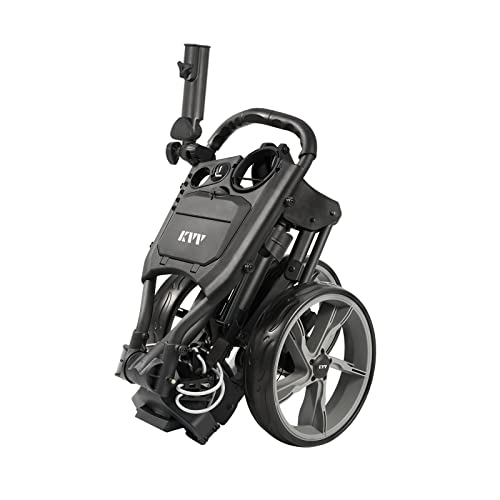
As an Amazon Associate we earn from qualifying purchases at no extra cost to you.
At a glance: current carts above the cap, for reference
| Cart | Best for | Key stated specs | Limits |
|---|---|---|---|
| Bag Boy Nitron | Golfers who want a one-motion auto-open cart | The maker lists 16.7 lb and a folded size of 19 x 13.5 x 22 inches | Heavier than the Slimfold or Quad Pro |
| Bag Boy Slimfold | Trunks with limited depth or width | The maker lists 15 lb and a folded size of 32.25 x 8.5 x 13.5 inches | Long when folded |
| Bag Boy Quad Pro | Golfers wanting a four-wheel design | The maker lists 16 lb and a folded size of 24 x 17 x 15 inches | More wheels to clean and store |
| Sun Mountain Speed Cart V1R | Walkers who want a three-wheel cart with an adjustable bag bracket | Retailers and reviewers list about 17.95 lb and a folded size of roughly 37 x 16 x 13 inches | Long when folded; figures differ slightly between listings |
These are reference points for what a quality cart offers. If your budget is firm, use the checklist below to judge lower-cost carts, because models with little documentation require extra caution.
What to look for in a budget cart
Wheel layout
Three-wheel carts roll straight and are easy to steer with one hand. Two-wheel pull carts are lighter and fold flat but tip more easily when loaded. Four-wheel designs are stable but heavier, as the 16 lb Quad Pro shows. If you walk hilly courses, a stable three-wheel layout is worth paying for.
Weight and folded size
The weights above, from about 15 lb to 18 lb, show a typical range for push carts. Under that you are likely getting a lighter frame or a two-wheel design. Measure your trunk and compare it with the folded dimensions: the Nitron folds to 19 x 13.5 x 22 inches, while the Slimfold is slim but 32.25 inches long.
Bag attachment
Look for adjustable upper and lower brackets or straps so the bag stays still. Check each cart’s page for how the bag attaches and whether the brackets adjust. A loose bag shifts the weight and makes the cart harder to steer.
Brake
A parking brake is a practical feature on slopes. Check whether the cart lists one. Test it before the first round to confirm it holds the cart on a slight incline.
Storage and extras
Scorecard holders, drink holders and phone holders are convenient but not essential. A sturdy frame and smooth wheels matter more than extras.
Weight capacity
The maker pages found do not state a bag weight limit for these carts. Check the manual for any model you consider, and do not overload it with a full bag plus extras.
Budget approaches
- Entry two-wheel carts: simple, light, and within the cap, but less stable and with fewer features.
- Off-brand three-wheel carts: within or near the cap at times. Expect heavier frames, simpler wheels and limited parts support. Read the folding mechanism details and the warranty text.
- Last-season or previous-generation carts: brands sometimes keep older versions available at lower prices. Confirm the model still has spare parts support.
- Used carts from golf shops or marketplaces: a well-built used cart can offer more than a new low-cost one. Inspect the wheels, brake, folding latches and frame alignment before buying.
Fit and care notes
- Check the bag: a stand bag with a pass-through strap or a cart bag with a flat bottom sits differently, and both should fit the cart’s brackets.
- Wipe the frame and wheels after wet or muddy rounds, and dry bearings to avoid rust.
- Do not fold the cart with a bag attached or with anything pinched in the latch.
- Keep the cart out of hot cars when possible; heat can warp plastic parts.
- Do not use the cart as a seat or lean heavy loads on it, unless the manual says it supports a seat accessory.
- Be careful on slopes: keep control of the handle, use the brake and do not leave a loaded cart unattended on a hill.
Push cart or pull cart
Push carts, with a wheel at the front and a handle you steer from behind, tend to track straighter than two-wheel pull carts, which swing behind you and can tip in tight turns. That is why most of the established brands above sell three-wheel push designs. A pull cart can still suit a golfer on a flat course who wants the lowest cost and the smallest fold. If you often play hilly layouts, a push cart with a parking brake is easier to control, because a loaded cart can build speed on a downhill slope.
Think about the bag too. A bag with a cart-friendly flat bottom and top handle sits securely on adjustable brackets, while a very slim stand bag can wobble on a wide bracket. Try the cart with your own bag before the first round and adjust the straps so the bag does not shift when you turn.
Before you buy any cart
Ask a few questions of any listing. Does it state the folded size and weight? Is there a manual or assembly guide you can read? Does the wheel set include a quick-release or a simple removal method for loading? Is there a warranty and a way to get spare wheels or latches? A cart whose page answers none of these is harder to trust. Weigh the money saved against the risk of a latch failing or a wheel wobbling halfway through a round, and consider a clearly documented used or previous-season cart from a known brand ahead of an unknown new one.
Pick X if…
| Pick this | If you… |
|---|---|
| A basic two-wheel cart | walk flat courses occasionally and need the lowest cost |
| Bag Boy Nitron | want auto-open convenience and a compact fold |
| Bag Boy Slimfold | have a narrow storage space with room for length |
| Sun Mountain Speed Cart V1R | want a three-wheel push cart from a known brand and have trunk room for a long, slim fold |
Budget tiers
Budget (around the cap): two-wheel carts and unbranded three-wheel designs. Choose these for light, occasional use and inspect the build quality carefully.
Mid-range: established brand three-wheel carts such as the Nitron and Speed Cart V1R, with documented weights, fold sizes and parts support.
Premium: carts with upgraded hardware and accessories, and electric remote carts for golfers who want help on hills.
Alternatives
- A lightweight stand bag: if you carry occasionally, a stand bag costs less than a cart and has no folding to manage.
- Pull carts: simpler and often more affordable than push carts, though they steer differently.
- Renting a cart: many courses offer rental push carts for those who walk only a few times a year.
Frequently Asked Questions
Can I buy a good push cart for under $150?
It is difficult with well-known brands, because their current push carts are generally positioned above this cap. Used carts, last-season models and simple two-wheel carts are the realistic options at this budget.
Three wheels or four?
Three-wheel carts such as the Speed Cart V1R and Nitron are the most common and track straight with light steering. Four-wheel carts like the Quad Pro are stable but heavier, at 16 lb per the maker.
How much should a push cart weigh?
The brand carts listed here range from about 15 lb to 18 lb. A lighter cart is easier to lift into a trunk, while a slightly heavier frame can feel more stable on slopes.
Will it fit my trunk?
Compare the maker’s folded dimensions with your trunk space. The Nitron folds to 19 x 13.5 x 22 inches, the Quad Pro to 24 x 17 x 15 inches, the Slimfold to 32.25 x 8.5 x 13.5 inches, and the Speed Cart V1R to roughly 37 x 16 x 13 inches. For models without stated dimensions, measure the folded cart in person if possible.
Do I need a parking brake?
It is useful on sloped courses and when you stop to hit a shot. Not every cart lists one. It is a convenience feature rather than a requirement on flat courses.
How do I take care of the cart?
Wipe off mud and moisture, dry the wheels, and store it folded in a dry place. Keep the latches clean and follow the manufacturer’s manual for lubrication and wheel care.




