We independently review everything we recommend. When you buy through our links, we may earn a commission. As an Amazon Associate we earn from qualifying purchases.
5 Best Compression Socks for Seniors at Home (November 2026)
Compare five compression socks for seniors by pressure level, calf fit, length, and ease of putting on, with comfort-first guidance for everyday wear.
Compare five compression socks for seniors by pressure level, calf fit, length, and ease of putting on, with comfort-first guidance for everyday wear.
A compression sock that fits well feels snug and even from ankle to calf, stays up through a full day, and comes off without a struggle. A poor fit does the opposite: it rolls at the top, binds behind the knee, or squeezes one spot while leaving the rest loose. The difference usually comes down to three choices made before buying: the pressure level stated on the listing, the calf measurement the size chart asks for, and the length that matches how the socks will be worn.
The five socks below are all graduated compression socks sold in multi-pair packs, with the pressure level, length, and size range stated in the listing title. They cover lighter everyday support and firmer support, standard and wide-calf fits, and knee-high lengths that suit sitting, standing, walking, and travel. Talk to a clinician about which pressure level suits you before choosing a firmer level, and measure your calf before ordering.
Quick Picks
As an Amazon Associate we earn from qualifying purchases.
Product
Best for
Key spec from title
FITRELL 3 Pairs Compression Socks
Everyday use in three colours
20-30mmHg, knee high, L/XL
CHARMKING 8 Pairs Compression Socks
Stocking up with the most pairs
15-20mmHg, graduated copper, wide calf
Doctor’s Select Copper Plus Size Compression Socks
Wide calves at a firmer level
20-30mmHg, extra wide calf, 3XL
Tinojye 4 Pairs Plus Size Compression Socks
Wide calves in a four-pack
20-30mmHg, extra wide calf, knee high
LEVSOX Plus Size Compression Socks
Lighter support with a wide calf
15-20mmHg, knee high, extra large calf
How to Choose
Start with the pressure level, and ask a clinician first
The pressure level is the first number to settle, because it decides how firm the sock feels all day. Listings in this guide state either 15-20mmHg or 20-30mmHg in the title. The lighter level suits first-time wearers and all-day comfort, while the firmer level feels noticeably tighter and is the level many experienced wearers choose. Do not jump to the firmer level on a guess: talk to a clinician about which level suits your legs and how long you plan to wear the socks each day. A clinician can also confirm whether graduated compression is right for you at all. Once you have a level in mind, ignore socks that do not state their level.
Measure your calf, not just your shoe size
Shoe size alone will not give a good fit in a compression sock, because the calf measurement decides whether the top band stays up or rolls down. Wrap a tape around the widest part of your calf, note the number, and compare it with the size chart on the listing before ordering. Wide-calf and plus-size listings exist for a reason: a standard size stretched over a wider calf feels tighter than its stated level and wears out faster at the heel and toe. If your measurement sits near the top of a size range, size up for comfort. Prefer listings that state a calf range as well as a shoe-size range.
Match the length to how you will wear them
Knee-high socks are the standard length in this guide, and they suit most everyday wear: sitting at a desk, walking, standing, and travelling. The sock should reach just below the knee without bunching behind it, because fabric folded behind the knee binds and digs in. If you mostly sit, a knee-high sock that stays smooth behind the knee matters more than extra cushioning in the foot. If you walk a lot, look for a sock whose title names cushioning or a reinforced heel and toe, since those are the spots that wear first. Ankle-length socks are a different product and will not give calf support, so confirm knee-high length in the title before buying.
Judge ease of putting on before you buy
A compression sock is harder to put on than a regular sock, and that matters most for stiff hands, sore fingers, or limited bending. Look for a wide calf opening, a smooth fabric that slides rather than grips, and a top band that stays up without digging in. A fresh pair each morning is easier to put on than a pair that has lost its stretch. If bending to reach your feet is difficult, a sock donner made for compression stockings is worth having, since standard sock aids are routinely excluded from use with compression hosiery. Put the socks on in the morning, when legs are least swollen, and take them off before bed.
The 5 Best Options
1. FITRELL 3 Pairs Compression Socks
Top Pick
1. FITRELL 3 Pairs Compression Socks
Best for: Everyday wear at a firmer level with three colours to rotate.
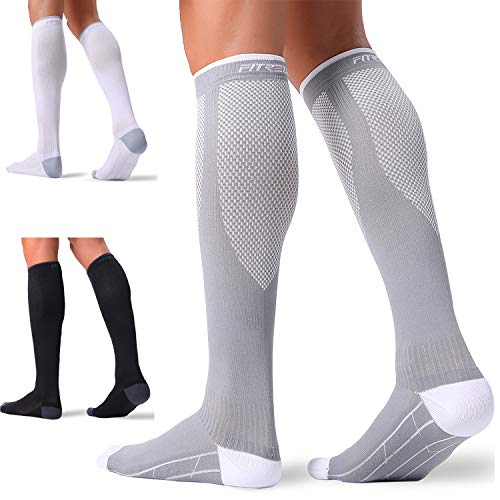
The FITRELL three-pack is the most versatile everyday option in this guide, because it pairs a firmer 20-30mmHg level with a knee-high length and three colours in one pack. The Black, White, and Grey colours make it easy to rotate pairs through the week without repeating the same look, and the L/XL size suits larger feet and calves. The title names travel, running, and nurse use, which signals a sock built for long days on the feet rather than a single short outing. For a first firmer-level sock, this pack covers the most situations with the fewest compromises.
Watch out for: The firmer level feels tight at first, so confirm the level with a clinician before ordering.
2. CHARMKING 8 Pairs Compression Socks
Runner-Up
2. CHARMKING 8 Pairs Compression Socks
Best for: Stocking up at a lighter level with a wide-calf fit.
The CHARMKING eight-pack is the stock-up choice, with the most pairs in this guide at a lighter 15-20mmHg level. The graduated copper support and wide-calf cut suit readers who want a lighter feel with room at the top band, and the knee-high length keeps the support where it belongs on the calf. Eight pairs means a fresh pair daily with a spare, and socks hold their stated level longer when washed and rested between wears. The L/XL size and Black colour keep the choice simple, and the wide-calf wording is the key detail for larger calves.
Watch out for: Eight pairs is a lot to store, so check drawer space before ordering the full pack.
3. Doctor’s Select Copper Plus Size Compression Socks
The Doctor’s Select copper sock is the wide-calf pick at a firmer level, with a 3XL size and an extra-wide-calf cut that standard sizes do not offer. The copper wording in the title names the yarn blend, and the two-pair pack keeps the commitment small while the fit is tested. Travelling and running uses are named in the title, which signals a sock made to stay up during movement rather than only during sitting. For wide calves that have found standard compression socks too tight at the top band, this is the most directly targeted option in the guide.
Specs
2 pairs in one pack
Copper plus-size compression socks as stated in the title
20-30mmHg as stated in the title
Extra wide calf fit
Size 3XL
Colour: Tan and copper
Uses named in the title: travelling and running
Best for: Extra-wide calves at a firmer level in a two-pair trial pack.
Watch out for: Confirm the 3XL calf range on the listing size chart, since plus-size ranges differ between brands.
ASIN: ⚠ B0FH7438SR
4. Tinojye 4 Pairs Plus Size Compression Socks
4. Tinojye 4 Pairs Plus Size Compression Socks
Best for: Wide calves in a four-pack at a firmer level.
4 pairs in one pack
Plus-size fit for men and women as stated in the title
The Tinojye four-pack gives wide-calf wearers a middle ground: four pairs, a firmer 20-30mmHg level, and a knee-high length stated in the title. The extra-wide-calf wording matches the Doctor’s Select pick above, but the four-pair pack and the men-and-women framing make this the better shared-household choice when two people wear the same size. The knee-high length is stated plainly, which removes the guesswork about where the sock ends. For a household that needs several pairs at a firmer level without buying eight, this pack hits the practical middle.
Watch out for: The title states no colour or size range, so confirm both on the listing before ordering.
5. LEVSOX Plus Size Compression Socks
5. LEVSOX Plus Size Compression Socks
Best for: Lighter support with an extra-large calf at knee-high length.
Plus-size fit for women and men as stated in the title
Wide calf fit, extra large calf as stated in the title
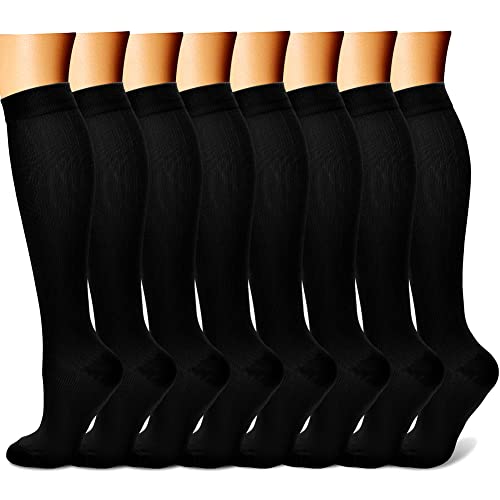
The LEVSOX sock is the lighter-level wide-calf pick, pairing 15-20mmHg support with a knee-high length and an extra-large-calf cut. The title names nurse, medical, and travel uses, which points to long shifts and long journeys rather than short outings. Black is the only colour named in the title, which keeps matching simple. For readers who found a firmer level uncomfortable or who are new to compression socks, this lighter level with a genuinely wide calf is the easiest starting point in the guide, and the extra-large-calf wording is worth confirming against the size chart.
Watch out for: The title states no pair count or size range, so confirm both on the listing before ordering.
Which One Fits Your Situation
You want one pack for everyday wear
Choose the FITRELL three-pack. The firmer level, knee-high length, and three colours cover work, walking, and travel in a single purchase, and the L/XL size suits larger feet and calves. Confirm the firmer level with a clinician first, and measure your calf against the size chart rather than guessing from shoe size alone.
You want the most pairs for the week
Choose the CHARMKING eight-pack. The lighter level is easier to live with all day, the wide-calf cut suits larger calves, and eight pairs mean a fresh pair every day of the week with a spare in reserve. Rotate pairs and wash them as directed so each pair keeps its stated level longer.
Your calves need a genuinely wide fit
Choose the Doctor’s Select copper sock or the Tinojye four-pack. Both state an extra-wide calf at the firmer level, with the Doctor’s Select in a two-pair 3XL trial and the Tinojye in a four-pair pack. Measure the widest part of your calf and compare it with the listing chart before deciding between them.
You are new to compression socks
Choose the LEVSOX sock. The lighter 15-20mmHg level is the gentlest introduction in this guide, the knee-high length and extra-large calf keep the fit comfortable, and the Black colour suits everyday wear. Start with the lighter level and ask a clinician before moving to a firmer one.
Common Mistakes
Buying by shoe size alone instead of measuring the widest part of the calf first.
Choosing the firmer 20-30mmHg level without asking a clinician whether it suits you.
Picking an ankle-length sock when the support needed is on the calf.
Wearing the same pair day after day without washing and resting it, which wears out the stretch.
Using a standard sock aid with compression hosiery, which makers routinely exclude.
Frequently Asked Questions
What pressure level should a first-time wearer choose?
Start with the lighter 15-20mmHg level unless a clinician advises otherwise. The lighter level is easier to put on and to wear all day. The firmer 20-30mmHg level feels noticeably tighter and is better chosen with a clinician’s guidance. Stop wearing them and ask a clinician if they cause pain, numbness, or skin marks that do not fade.
How do I measure for the right size?
Measure around the widest part of your calf, and your ankle if the chart asks for it. Compare both numbers with the size chart on the listing, not with your shoe size alone. If your calf measurement sits at the top of a size range, the next size up is usually more comfortable. Ranges differ between brands, so always check the chart for the exact listing.
How long should compression socks be worn each day?
Put them on in the morning and take them off before bed, unless a clinician advises a different routine. Morning is best because legs are usually least swollen then. Take them off if they cause pain, tingling, or numbness, and ask a clinician before wearing them overnight. Wash pairs as directed and rotate them so each pair rests between wears, which helps the fabric hold its stated level.
Can I use a sock aid to put compression socks on?
Standard sock aids are routinely excluded from use with compression socks, because compression hosiery is tighter and longer than regular socks. A donner made for compression stockings is the right tool if bending or grip strength makes putting the socks on difficult. Ask a clinician or an occupational therapist which donner suits the socks you buy, and put the socks on in the morning when the task is easiest.
A
admin
We compare specs, materials and verified owner reviews before a product earns a spot. Rankings are never paid.
Affiliate disclosure. As an Amazon Associate we earn from qualifying purchases at no extra cost to you. Prices accurate as of the date shown.
Compare five everyday backpacks for seniors: light weights, chest straps, padded backs, easy zippers, and bottle pockets for outings, errands, and travel.
Find the best doorbell cameras for Echo Spot with Alexa announcements, two-way talk, and live view on Echo Show. Compare Ring, Blink, and eufy picks now.
Compare replacement outdoor cushion covers: zippered, water-resistant shells for 20 and 24 inch seats, seat-and-back sets and a full six-seat sectional set.
Compare the best air purifiers for kitchen use by activated carbon stage, smoke CADR, and manufacturer room size, with specs for cooking odors and smoke.
Compare five electric heating pads for seniors, from a weighted 24 by 33 inch pad to a king-size model, with heat settings and auto shut-off explained.


 5. LEVSOX Plus Size Compression Socks