We independently review everything we recommend. When you buy through our links, we may earn a commission. As an Amazon Associate we earn from qualifying purchases.
4 Best Bow Sights for Mathews Bows (November 2026)
Compare four bow sights that fit Mathews risers, including Bridge-Lock dovetail sliders and a five-pin React model, by pin count, pin size and mount type.
Compare four bow sights that fit Mathews risers, including Bridge-Lock dovetail sliders and a five-pin React model, by pin count, pin size and mount type.
A Mathews riser leaves you with two mounting decisions before pin count even matters: slide a dovetail sight through the Bridge-Lock cutout in the riser, or bolt a conventional bracket sight to the standard mounting holes that Mathews still machines into the same risers. Pick the wrong mount family and the sight you want simply will not attach the way you planned, no matter how good its pins are.
This guide is for Mathews owners running a V3X, Phase4, LIFT or an older Mathews with standard sight holes, and for hunters choosing between fixed pins and a slider. Every sight below was picked from its Amazon listing name and specifications, so pin counts, pin sizes and mount types come straight from the listing rather than from brand marketing pages.
Quick Picks
As an Amazon Associate we earn from qualifying purchases
Product
Best for
Key spec from title
Trophy Ridge React Pro 5 Pin
Fast five-pin sight-in
5 pins, .010, right hand
Spot Hogg Fast Eddie XL Double Pin
Dialing from a Bridge-Lock riser
Double pin, 6-inch dovetail bar
Axcel Landslyde Carbon Pro
Lightweight single-pin slider
Single .019 green fiber pin
HHA Optimizer Lite X LX-5519
Simple single-pin hunting
.019 pin with rheostat
How to Choose
Start With the Mount Your Riser Accepts
Mathews changed the sight conversation when it cut the Bridge-Lock dovetail into the V3X riser and carried it through the Phase4 and LIFT lines. A dovetail sight slides through that cutout and locks inside the riser, which centers the sight and removes the side bracket entirely. The same risers still carry the standard two-screw mounting holes, so a conventional bracket sight bolts on the way it always has. Older Mathews bows without the cutout accept bracket sights only. Decide which family you are buying before comparing pins, because a dovetail bar and a bracket are not interchangeable on the same purchase.
Fixed Pins or a Slider Housing
A fixed five-pin sight gives you an aiming point for set distances with nothing to move at full draw, which suits stand hunting where shots cluster inside known yardages. A slider carries one or two pins and moves the whole housing against a yardage tape, so you dial the exact distance instead of holding a gap between pins. Sliders reward hunters who range every shot and shoot past forty yards, while fixed pins reward speed when an animal steps out close. Neither layout is more accurate; they simply shift the work to different moments in the shot.
Pin Size and Pin Count
Pin diameter is the quiet decision that shapes every aiming picture. A .019 pin is thicker, gathers light well and stays easy to see at first and last light, which is why most hunting listings default to it. A .010 pin covers less of the target and suits longer shots or target work where a fat dot hides the spot you want to hit. Pin count follows the same logic: five pins cover more distances without moving parts, a double pin splits the difference, and a single pin keeps the housing empty at the cost of dialing for each distance.
Axis Adjustment and Build
Second-axis leveling keeps the sight housing square to the bow, and third-axis adjustment keeps your bubble honest when the shot angles up or down from a stand or a slope. On flat ground at short range you may never touch either, but angled shots expose a housing that is even slightly out of level. Build material matters for the same reason: machined aluminum housings shrug off knocks that crack composite ones, while a carbon bar trims weight on a bow you carry all day. Tool-less micro-click windage and elevation knobs are worth having either way, because they turn sight-in from a wrench job into a few clicks.
The React Pro is the pick for a Mathews owner who wants five pins without an afternoon of walking targets back and forth. Its React Technology spaces the remaining pins mathematically once the first pins are set, and the listing pairs that system with a solid aluminum housing, stainless hardware and tool-less micro-click adjustments. The bracket bolts to the standard mounting holes found on current and older Mathews risers alike, and Trophy Ridge also lists Bridge-Lock brackets for the React family if you later want the sight sitting inside a Bridge-Lock riser instead of beside it.
The Fast Eddie XL is built around a six-inch dovetail bar, which is exactly the mount style a Bridge-Lock riser is cut to receive, so on a V3X, Phase4 or LIFT it slides through the riser and locks down with no side bracket in the way. The double pin scope puts two aiming points on one vertical post, and the housing rides a slider so the lower pin dials to longer yardages. Everything is machined from solid 6061 aluminum, with toolless coarse adjustments and micro-adjustable second and third axis leveling for angled shots.
The Landslyde Carbon Pro answers a different problem: how to run a dialed single pin without hanging a heavy sight off the front of a light Mathews riser. The carbon bar keeps the assembly light, and the dovetail mount suits Bridge-Lock risers that accept dovetail-style sights. A single .019 green fiber pin keeps the housing picture empty, and the elevation slider works against yardage tapes so the pin lands on the exact distance you ranged. It is the natural fit for a LIFT owner who counts ounces and shoots a mix of 3D targets and open-country game.
The Optimizer Lite X is the straightforward single-pin option for a Mathews that predates Bridge-Lock, or for an owner who simply prefers the standard two-screw bracket. The LX-5519 listing centers on a single .019 pin inside a 1-5/8 inch housing, a rheostat that adjusts pin brightness as light changes, and a yardage tape system you calibrate at two known distances. There is no pin stack to sort through at full draw and very little to knock out of place, which is why this sight keeps showing up on hunting bows that get carried more than they get adjusted.
Which One Fits Your Situation
Your Mathews Has Bridge-Lock and You Want the Sight Inside the Riser
Order a dovetail sight and use the cutout the riser was built around. The Spot Hogg Fast Eddie XL slides its six-inch dovetail bar through the riser for the most protected mount, while the Axcel Landslyde Carbon Pro does the same job on a lighter carbon bar. Both keep the housing centered over the bow instead of hanging off a side bracket, and both remove and reinstall without disturbing your marks.
You Hunt Whitetails From a Stand Inside Forty Yards
Take the Trophy Ridge React Pro. Five fixed pins cover the distances a stand hunter actually shoots, React Technology shortens the sight-in session, and there is nothing to dial when a deer appears at an unplanned yardage. Its bracket fits the standard holes on older Mathews bows as well, so the same sight works whether your riser has the Bridge-Lock cutout or not.
You Range Every Shot and Shoot Past Fifty Yards
A slider earns its keep here. The Landslyde Carbon Pro pairs a single .019 pin with a yardage tape for exact dialing and keeps weight down on long carries. The Fast Eddie XL adds a second pin for a quick close reference while still dialing the bottom pin long, and its machined housing tolerates the bumps that come with covering ground.
Your Mathews Predates Bridge-Lock
Your riser takes bracket sights, and that is not a limitation worth upgrading around. The HHA Optimizer Lite X bolts on with the standard mount and gives you one bright, rheostat-controlled pin, while the React Pro adds a full five-pin stack on the same mounting pattern. Either way, check that the listing variant matches your hand before ordering, because these sights are not reversible.
Common Mistakes
Buying a dovetail sight for an older Mathews riser that has no Bridge-Lock cutout and no way to accept a dovetail bar.
Ordering the wrong pin size variant, since .010 and .019 versions of the same sight sit in separate listings with separate configurations.
Choosing a right-hand or left-hand model from the headline photo instead of the listing variant, because most of these sights cannot be flipped.
Sighting in a slider with one arrow setup, then changing arrows and assuming the yardage tape still lands where it used to.
Ignoring third-axis leveling and then blaming the sight when angled stand shots drift sideways.
Frequently Asked Questions
Does a Bridge-Lock sight fit older Mathews bows?
No. Bridge-Lock is a dovetail cutout machined into newer Mathews risers such as the V3X, Phase4 and LIFT lines. An older riser without that cutout has nowhere for a dovetail bar to slide through, so those bows use bracket sights on the standard mounting holes, like the HHA Optimizer Lite X or the Trophy Ridge React Pro in this guide.
Can I bolt a standard bracket sight onto a Bridge-Lock riser?
Yes. Mathews kept the standard two-screw sight mounting holes on its Bridge-Lock risers, so a conventional bracket sight mounts the same way it does on an older bow. You give up the centered, in-riser position a dovetail sight provides, but nothing about the bracket mount hurts accuracy, and it keeps older sights useful on a new riser.
Which pin size suits a Mathews hunting bow, .010 or .019?
Most hunters are better served by .019 pins, which stay visible in the low light when shots actually happen. A .010 pin covers less of the target and rewards shooters who take longer shots or shoot targets, but it can fade against a dark background at dawn. Match the variant in the listing to your eyes, not to the headline configuration.
Do I need third-axis adjustment on a hunting sight?
If every shot you take is level and inside thirty yards, you may never use it. The moment you shoot down from a treestand or across a slope, an unleveled third axis lets the bubble lie to you and pushes shots sideways. Sights like the Fast Eddie XL and React Pro include the adjustment, so the option is there when terrain demands it.
M
Melu Editorial Team
We compare specs, materials and verified owner reviews before a product earns a spot. Rankings are never paid.
Affiliate disclosure. As an Amazon Associate we earn from qualifying purchases at no extra cost to you. Prices accurate as of the date shown.
Compare the best smartwatches for lg phones with Wear OS, GPS, heart rate and sleep tracking, plus battery life details to pair with your LG handset today.
Compare the best cpu coolers with push pins for Intel builds, covering tool-free mounting, socket fit, fan noise and low-profile options for simple installs.
Compare cameras for indoor guitar playing, framed for recording and streaming at home, with flip screens, microphone inputs and clean streaming output.
Four spotting scopes that pull double duty after dark, compared on aperture, magnification range and eyepiece options, with listing specs for each pick.
Four broadheads for low poundage bows compared by grain weight, blade style and cutting diameter, with every spec taken from the Amazon listing itself.
The best ultrawide creator monitors for workstation upgrades pair color accuracy with UWQHD resolution and USB-C hubs. Compare five displays for editing.
Compare the best CPAP backup battery packs, from a 99.9Wh travel pack to 266Wh and 297Wh multi-night packs, with the outputs and cables each one states.
Compare five binoculars for glasses wearers, from long eye relief models to an eyeglass-friendly pair, and match eye relief, size, and use to your needs.

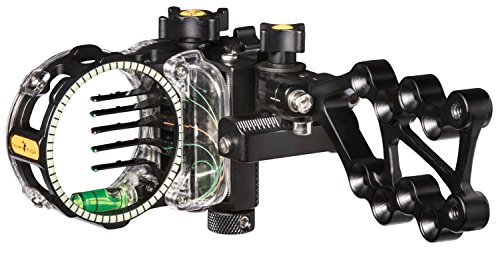


 HHA Optimizer Lite X Bow Sight LX-5519